
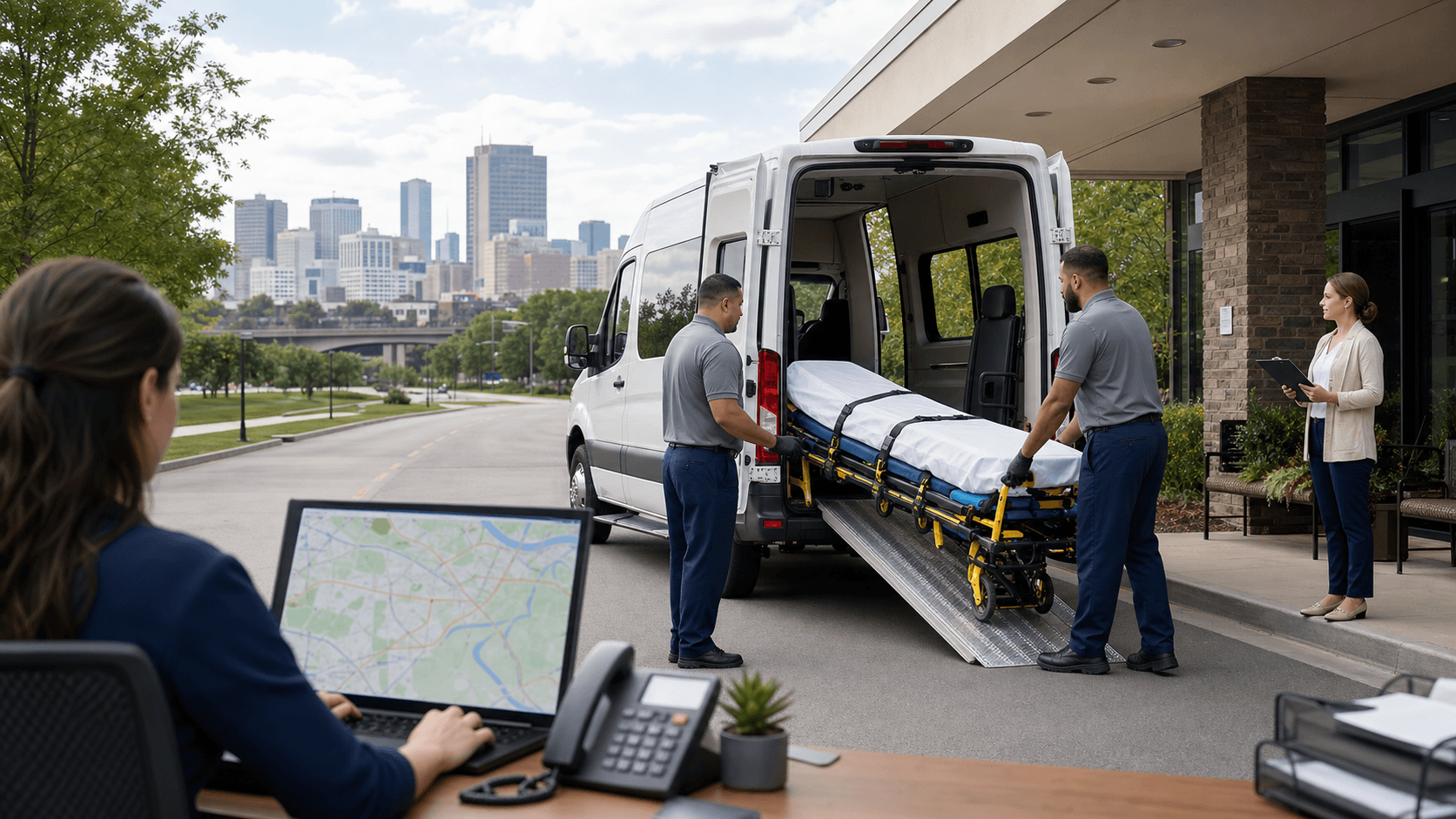
When a Bed-Bound Ride Becomes the Safest Option
When someone cannot safely sit up for a ride across town, even a short trip can feel stressful for families and care teams. Stretcher transportation gives bed-bound riders a way to travel to needed appointments or between facilities while staying reclined and supported the entire time. Understanding what this service is and what it is not helps everyone make safer decisions.
Stretcher transportation is a type of non-emergency medical transportation where the rider stays on a stretcher or cot instead of sitting in a car seat or wheelchair. It is different from:
- Wheelchair transport, where the rider can safely sit upright in a secured wheelchair
- Ambulatory transport, where the rider walks with or without assistance to a standard seat
- Emergency ambulance transport, which is for urgent or life-threatening situations and includes lights, sirens, and on-board medical care
People who may need stretcher transport are often bed-bound, unable to sit upright without risk, or require special positioning, such as lying flat or with elevated legs, during a non-emergency trip. That can include discharges, inter-facility transfers, or recurring outpatient visits.
At Trip-Ledger LLC, based in Virginia, we build technology that helps connect both facilities and private-pay riders in the Greater Richmond area with modern non-emergency transportation options, including stretcher transportation where available. Our focus is on non-emergency trips only. Stretcher transportation arranged through our platform does not replace 911, does not include lights-and-sirens ambulance response, and does not provide clinical medical care during the ride.
If you are a facility planner, discharge coordinator, or family caregiver in the Greater Richmond area and would like to explore stretcher transportation options, you can request a quote or start the booking process.
When Stretcher Transportation in Richmond, VA May Be Appropriate
There are many non-emergency situations where stretcher transportation in Richmond, VA may be requested. Some common examples include:
- Discharge from a hospital or rehab facility when a rider is still bed-bound
- Trips to outpatient appointments or procedures when sitting for the whole ride is not realistic
- Imaging or longer procedures where a rider will likely be tired afterward
- Follow-up visits after surgery or procedures when lying flat or semi-reclined is safer
From a safety standpoint, stretcher transport may be a better option than a car ride if:
- The rider cannot sit upright for the full duration of the trip
- Transfers into a wheelchair are not safe or recommended
- The rider needs to lie flat, keep legs elevated, or maintain a specific position that standard seating cannot provide
Final decisions about whether a rider should travel by stretcher should always follow guidance from the clinical team or facility policies. Trip-Ledger does not make medical determinations. Our role is to help coordinate logistics once the appropriate level of transport has been chosen.
For facilities and care organizations, stretcher transport can support:
- Risk management, by reducing unsafe transfers or falls
- Fall prevention, especially during loading and unloading
- Continuity of care, by helping riders arrive in the condition the clinical team expects
For families, choosing stretcher transportation can:
- Reduce physical strain, since caregivers are not lifting or transferring a loved one into a car
- Offer peace of mind, knowing trained transport staff handle movement and securement
- Support a calmer ride, with fewer position changes and less discomfort for the rider
If you believe stretcher transport may be appropriate for an upcoming non-emergency trip, you can contact Trip-Ledger through our online booking tools to review options and request pricing for your specific route and timing.
How Stretcher Transport Differs From Wheelchair and Car Rides
Stretcher transportation is designed around the needs of riders who must stay reclined or semi-reclined. Compared to wheelchair NEMT or private vehicles, key differences include:
- Vehicles that are built or adapted to secure stretchers safely
- Loading systems such as ramps or lifts that accommodate both stretchers and staff
- Extra interior space for positioning, comfort, and privacy
Comfort and dignity matter. With stretcher transportation, riders can:
- Be loaded with fewer transfers and less bending or lifting
- Remain reclined or semi-reclined from bedside to destination
- Travel with more privacy than in a standard vehicle seat
Typically, trained transportation staff manage safe transfers to and from the stretcher when needed and ensure proper securement in the vehicle. Any medical treatment, monitoring, or clinical decision-making stays with the medical providers before and after transport, not with the NEMT team.
For facility planners, stretcher rides may mean:
- Coordinating pickup directly at the bedside or designated unit
- Arranging clear handoffs at the receiving facility or department
- Documenting the type of transportation in discharge summaries or care plans
For families at home or in a residential setting, it helps to:
- Clear entryways and hallways so there is room for the stretcher and staff
- Share any building access information, such as gate codes, elevator notes, or tight stairwells, when booking
- Think ahead about where the rider will be before pickup and after drop-off, such as a bedroom or main living area
When you are ready to schedule, you can use Trip-Ledger's platform to enter pickup and drop-off details, note any building access information, and request a stretcher-capable vehicle where available.
Coordinating Stretcher Transportation for Facilities and Families
For facilities, scheduling stretcher transportation in Richmond, VA often becomes part of discharge planning or recurring appointment workflows. Trip-Ledger's technology is designed to support that planning with:
- Centralized trip details so teams can see when rides are scheduled
- Clear pickup and drop-off locations, including unit or room numbers
- Documented special instructions about mobility, positioning, or building access
Accurate timing windows are important. Thoughtful scheduling helps reduce delays, keep the care team on track, and minimize the rider's time waiting.
For private-pay riders, caregivers, and families, it helps to gather key information before requesting a quote or booking:
- Exact pickup and drop-off addresses
- Desired date, pickup time, and appointment time
- The rider's mobility status and whether they can help with transfers at all
- Building details, such as stairs, elevators, and parking access
- Any equipment traveling with the rider, such as oxygen, personal devices, or bags
Private-pay NEMT, including stretcher transport, is different from emergency ambulance services. Payment expectations, coverage, and what is included in the ride will not be the same as calling 911. Clarifying that difference upfront can prevent confusion later.
Across both facility and family use, Trip-Ledger focuses on clear communication so riders, caregivers, and transportation providers share the same expectations. If at any point a situation feels like a medical emergency or there is concern that a rider may need urgent medical care, emergency services should be contacted instead of arranging non-emergency NEMT.
To coordinate a stretcher ride through Trip-Ledger, facilities and families in the Greater Richmond area can submit trip details, request a quote, and complete booking through our secure online process.
Preparing a Rider for a Safe, Calm Stretcher Trip
Good preparation can make stretcher transportation smoother for everyone involved.
For facilities and care teams, helpful steps include:
- Confirm with the clinical team that stretcher transport is appropriate for the rider
- Have paperwork, after-visit summaries, and prescriptions ready before pickup
- Gather personal items, such as glasses, hearing aids, or small comfort items
- Coordinate staff support at pickup and drop-off when transfers or special assistance are expected
Families and caregivers can support a calmer experience by:
- Explaining in simple terms what will happen, such as staying on a stretcher and riding in a special vehicle
- Choosing comfortable, loose clothing that is easy to move in
- Bringing a favorite blanket or small personal item if the transportation provider allows it
- Preparing medication schedules around the trip when advised by a clinician
Timing is another important part of planning. Pickup is often scheduled within a time window rather than to the exact minute. Traffic, weather, and the time needed to safely load and secure a stretcher rider can affect arrival times, so building a small buffer into appointment times can reduce stress.
Safety and dignity should guide each step. Stretcher transportation is meant to move riders gently, without rushing, while respecting personal space and comfort. Available vehicle types, equipment, and specific capabilities can vary, so riders and facilities should confirm details with the transportation provider when booking through the Trip-Ledger platform.
Taking the Next Step Toward a Safer Ride in Richmond
Stretcher transportation in Richmond, VA can be an important option when riders cannot safely travel in a standard car or wheelchair van. With careful planning, clear communication, and the right non-emergency transportation partner, both one-time and recurring trips can be safer, calmer, and more comfortable for riders, caregivers, and care teams.
At Trip-Ledger LLC, our focus is on building practical, modern tools that connect people in the Greater Richmond community with non-emergency rides that match their needs, including stretcher transport where it is the safest way to travel.
If you are a facility, care organization, or private-pay family planning a non-emergency stretcher trip in the Greater Richmond area, you can visit Trip-Ledger's website to request a quote, review available options, and book a ride through our online system. For questions about how our platform supports your transportation planning, you can also reach out through our contact page so our team can follow up with more information.
Coordinate a Stretcher-Capable Ride Request
If you are arranging a stretcher-capable non-emergency ride in Richmond or the surrounding area, Trip-Ledger can help capture the request details, coordinate timing, and keep the planning focused on the rider's needs. Start at https://book.trip-ledger.com/book or contact https://trip-ledger.com/contact.html.